Cold and Cough : Simple Tips for Better Care
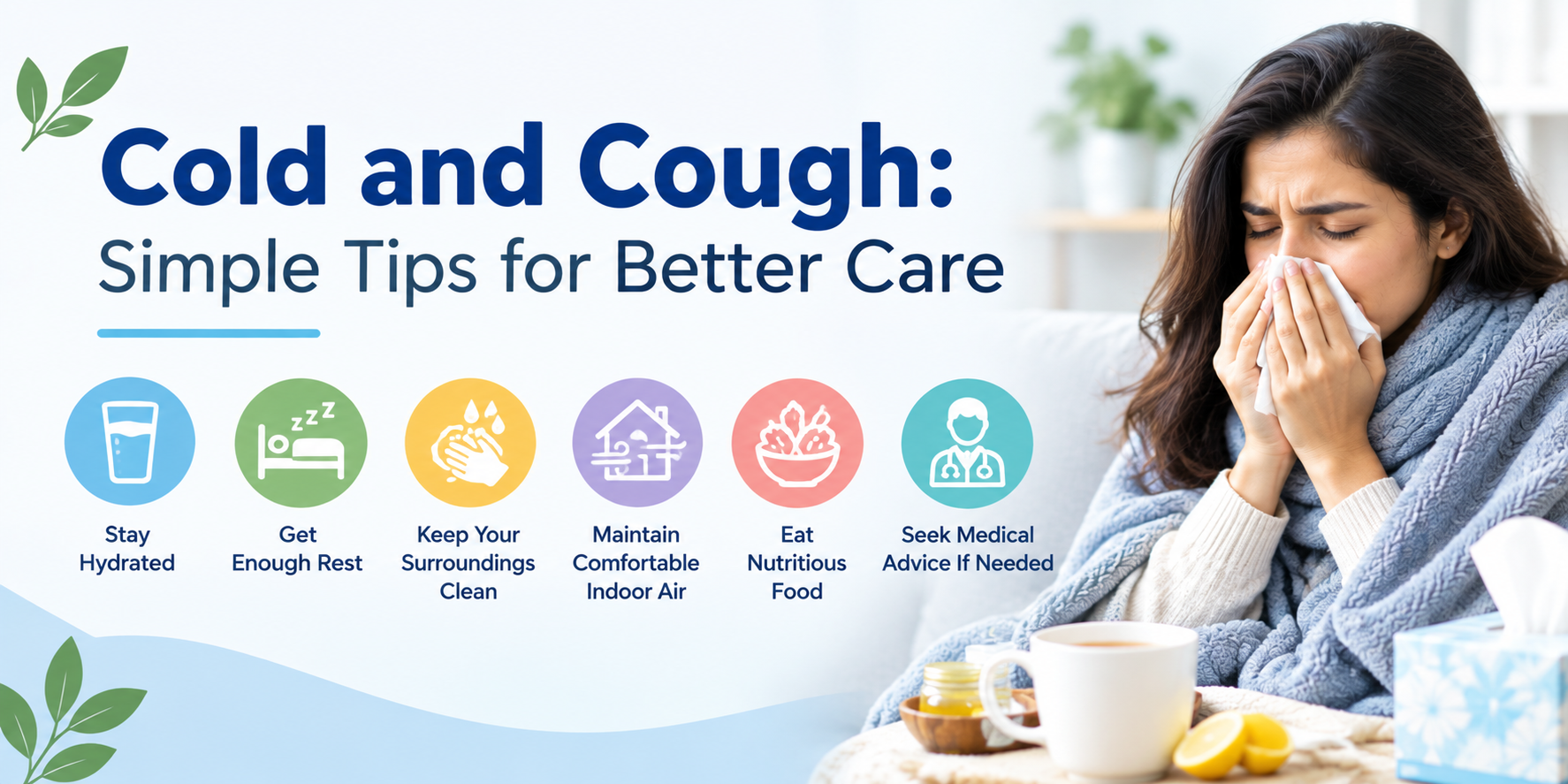
Cold and cough are common health problems, especially during seasonal changes. A cough can occur with a common cold, respiratory infection, allergies, or other conditions. Most mild colds improve with time, rest, and supportive care.
Understanding simple ways to care for yourself can help you manage common symptoms while your body recovers.
Stay Hydrated
Drinking enough fluids is important when you have a cold or cough. Water, warm fluids, and other suitable drinks can help maintain hydration.
Warm drinks may also feel soothing when you have a sore or irritated throat. Avoid excessive consumption of very sugary drinks.
Get Enough Rest
Your body needs adequate rest while recovering from illness. Try to get enough sleep and avoid unnecessary physical exertion when you are feeling unwell.
A comfortable sleeping environment can also help you rest better.
Keep Your Surroundings Clean
Regular handwashing is one of the simple ways to reduce the spread of many respiratory infections. Wash your hands after coughing or sneezing and before eating.
Avoid sharing personal items such as towels, cups, or utensils when someone in the household is unwell.
Maintain Comfortable Indoor Air
Dry air may make an irritated throat or cough feel uncomfortable for some people. Keeping the room comfortably ventilated and maintaining suitable humidity may help.
Avoid exposure to cigarette smoke, strong fragrances, dust, and other irritants that can worsen coughing.
Eat Nutritious Food
When you are recovering from a cold, try to maintain a balanced diet. Fresh fruits, vegetables, soups, whole grains, and other nutritious foods can provide essential nutrients.
If your appetite is reduced, smaller meals may be easier to manage.
Avoid Unnecessary Self-Medication
Many colds improve without antibiotics. Antibiotics do not treat viral infections such as most common colds.
Avoid taking antibiotics or other medicines without appropriate medical advice. If you need medication for your symptoms, a healthcare professional or pharmacist can help you choose an appropriate option based on your situation.
When Should You See a Doctor?
Seek medical advice if symptoms are severe, getting worse, or lasting longer than expected. Difficulty breathing, chest pain, persistent high fever, severe weakness, dehydration, or other concerning symptoms may require prompt medical attention.
People with certain chronic health conditions or weakened immunity may also need medical advice earlier.
Final Thoughts
Most mild colds and coughs can be managed with rest, adequate fluids, nutritious food, and avoiding irritants. Good hygiene can also help reduce the spread of respiratory infections.
If symptoms are severe, persistent, or unusual, consult a qualified healthcare professional for appropriate evaluation and care.