Vaginal Exercises: Benefits, Techniques and Tips for Better Pelvic Health
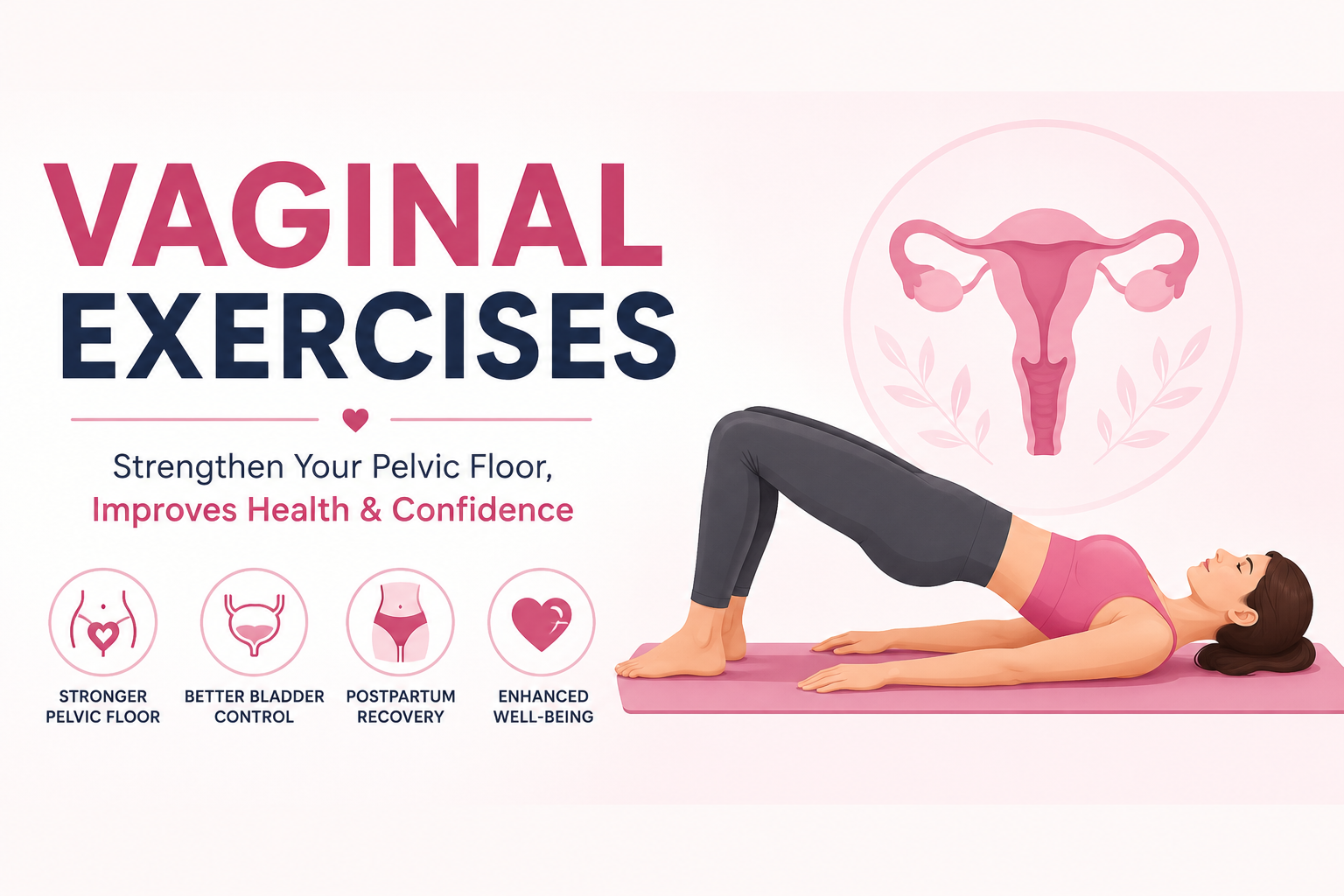
Vaginal exercises, commonly referred to as pelvic floor exercises or Kegel exercises, are designed to strengthen the muscles that support the bladder, uterus, bowel, and vagina. These exercises are simple, require no equipment, and can be performed almost anywhere.
What Are Vaginal Exercises?
The pelvic floor is a group of muscles located at the base of the pelvis. These muscles help support pelvic organs and play an important role in bladder control, bowel function, and sexual health. Weak pelvic floor muscles can occur due to pregnancy, childbirth, aging, obesity, or certain medical conditions.
Benefits of Vaginal Exercises
Regular pelvic floor exercises may help:
- Improve bladder control.
- Reduce mild urinary leakage (stress urinary incontinence).
- Support recovery after pregnancy and childbirth.
- Improve pelvic muscle strength.
- Enhance pelvic stability.
- Support sexual well-being by improving pelvic muscle awareness and strength.
Results vary from person to person, and these exercises should not be considered a guaranteed treatment for sexual problems.
How to Perform Kegel Exercises
Step 1: Identify the Correct Muscles
One way to identify the pelvic floor muscles is by imagining that you are trying to stop the flow of urine. This is only for identifying the muscles and should not become a regular exercise during urination.
Step 2: Tighten the Muscles
Gently contract the pelvic floor muscles and hold the contraction for about 3–5 seconds.
Step 3: Relax
Release the muscles completely and rest for another 3–5 seconds.
Step 4: Repeat
Perform 10–15 repetitions, about 2–3 times per day, or as advised by a healthcare professional.
Tips for Better Results
- Breathe normally during the exercise.
- Avoid tightening the stomach, thighs, or buttocks.
- Practice consistently every day.
- Empty your bladder before beginning the exercises.
- Gradually increase the hold time as your muscles become stronger.
Common Mistakes
- Holding your breath.
- Tightening the wrong muscles.
- Exercising only while urinating.
- Expecting immediate results.
- Performing too many repetitions, causing muscle fatigue.
Who Can Benefit?
Pelvic floor exercises may be beneficial for:
- Women after pregnancy and childbirth.
- Women with mild urinary leakage.
- Older adults experiencing age-related muscle weakness.
- Individuals advised by a healthcare professional to strengthen the pelvic floor.
When to Consult a Healthcare Professional
Seek medical advice if:
- You experience persistent pelvic pain.
- You have severe urinary incontinence.
- You are unsure whether you are performing the exercises correctly.
- Symptoms do not improve despite regular practice.
A physiotherapist specializing in pelvic floor rehabilitation or another qualified healthcare professional can provide individualized guidance.
Conclusion
Vaginal exercises, also known as Kegel exercises, are a safe and effective way to strengthen the pelvic floor muscles for many women. With regular practice and proper technique, they may improve bladder control, support pelvic health, and contribute to overall well-being. If you have ongoing symptoms or concerns, consult a qualified healthcare professional for evaluation and personalized advice.