Healthy Sleep Habits for Better Physical and Mental Health
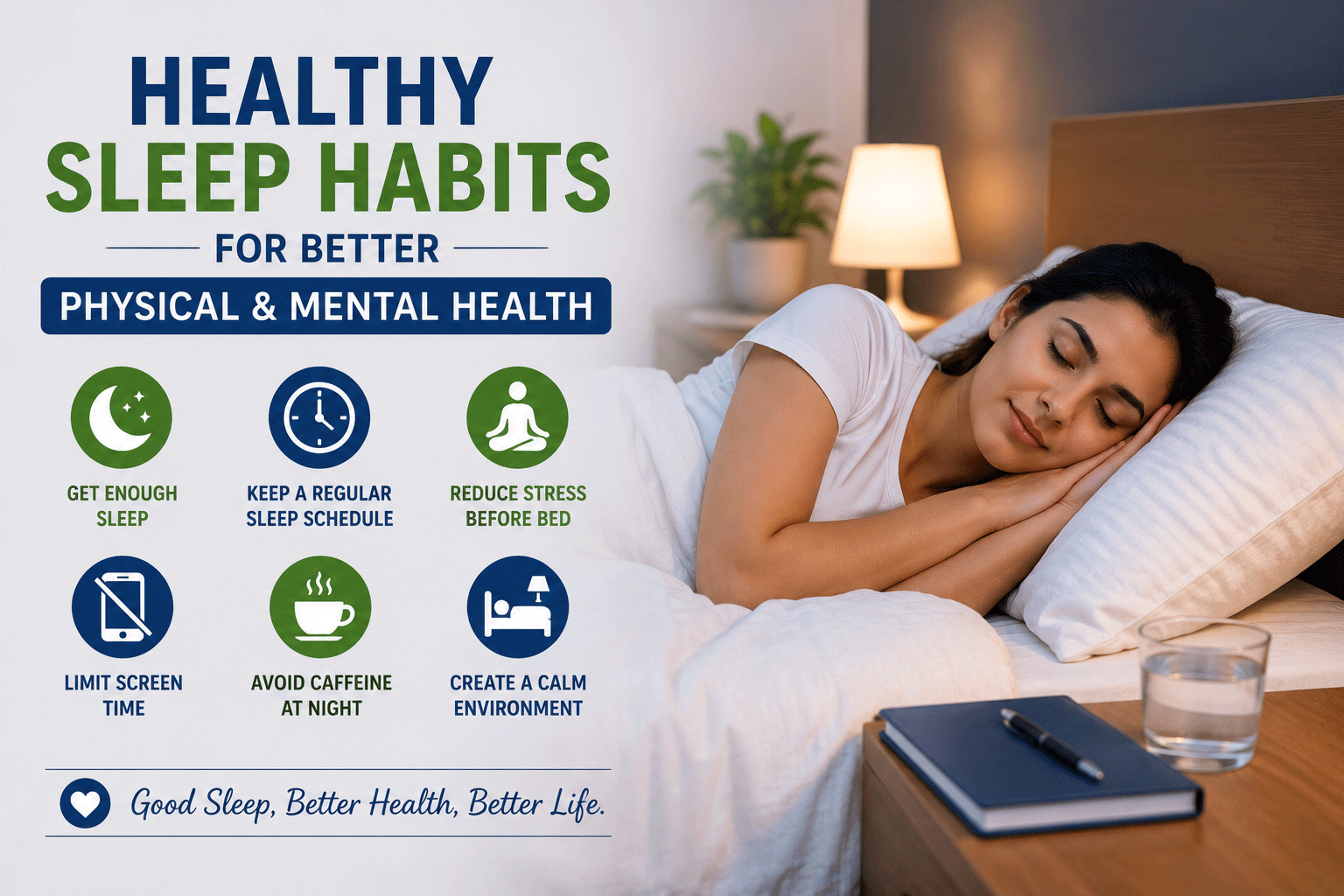
Sleep gives the body time to rest and recover. A regular sleep routine can support energy, concentration, mood, and overall health. However, busy schedules, excessive screen time, stress, and irregular routines can make it difficult to get quality sleep.
Maintain a Regular Sleep Schedule
Try to go to bed and wake up around the same time each day. A consistent routine can help your body develop a healthy sleep pattern.
Create a Comfortable Bedroom
Keep your bedroom comfortable, quiet, and suitable for sleeping. A relaxing environment may make it easier to fall asleep.
Reduce Screen Time Before Bed
Phones, computers, and other screens can keep your mind active at night. Try to reduce screen use before bedtime and choose a relaxing activity instead.
Avoid Heavy Meals Late at Night
Eating very heavy meals close to bedtime may cause discomfort for some people. Try to maintain a reasonable gap between dinner and bedtime.
Manage Daily Stress
Stress can make it difficult to relax. Deep breathing, meditation, gentle stretching, or reading can help create a calming bedtime routine.
Stay Physically Active
Regular physical activity can support healthy sleep. However, if exercising late makes you feel more alert, schedule your workout earlier in the day.
Avoid Excessive Caffeine
Caffeine can affect sleep, particularly when consumed later in the day. Consider limiting tea, coffee, and other caffeinated beverages in the evening.
How Much Sleep Do Adults Need?
Most adults generally need around 7–9 hours of sleep each night, although individual needs can vary.
Conclusion
Healthy sleep is an important part of overall wellness. A consistent bedtime routine, comfortable sleeping environment, regular exercise, stress management, and reduced screen time can help support better sleep and a healthier lifestyle.