Heart Attack: Causes, Symptoms, Risk Factors and Prevention Tips
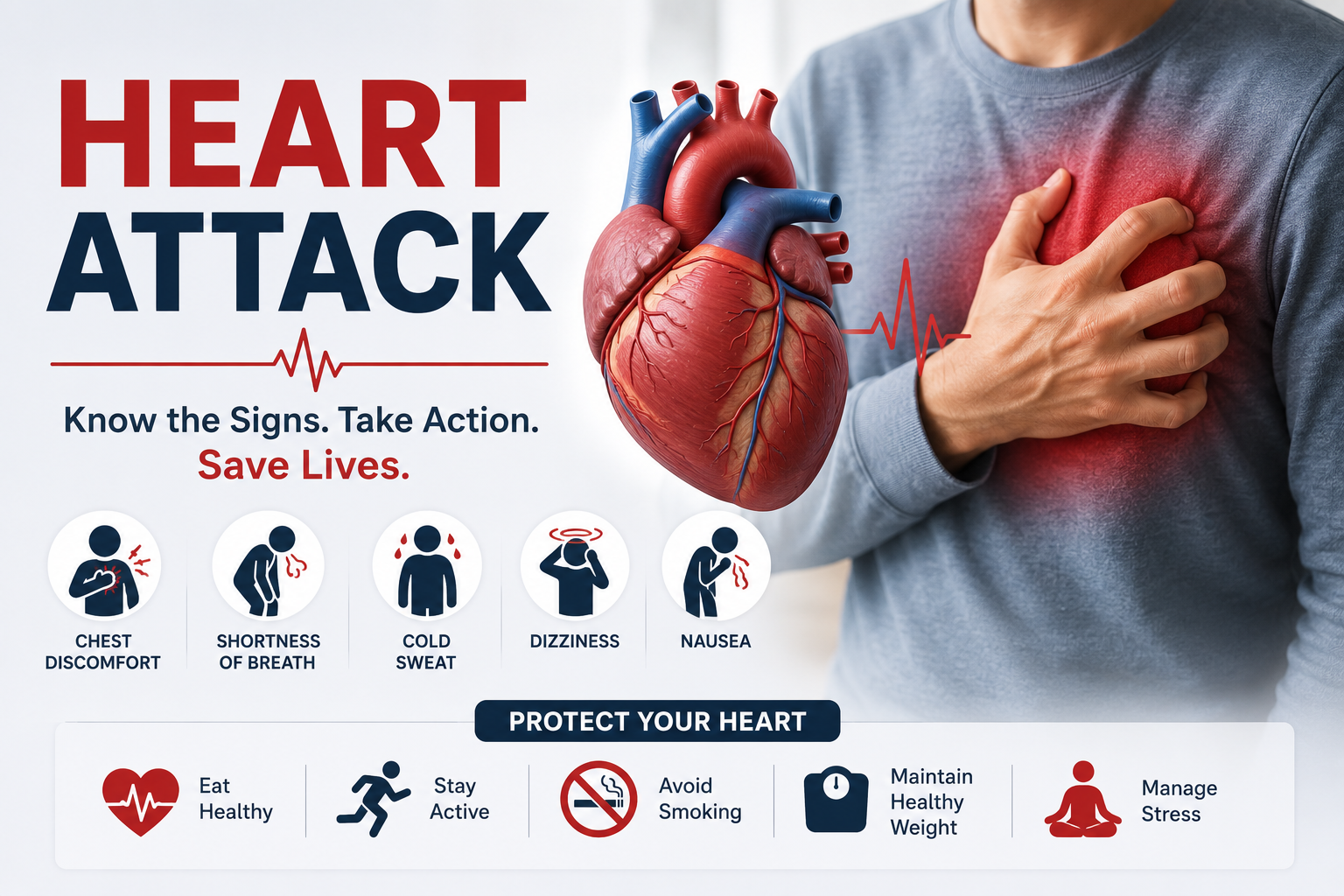
A heart attack, also known as a myocardial infarction, occurs when blood flow to a part of the heart muscle is blocked, preventing it from receiving enough oxygen. Without prompt treatment, the affected heart muscle can become damaged. Recognizing the warning signs and seeking emergency medical care immediately can save lives.
What Is a Heart Attack?
The heart relies on a continuous supply of oxygen-rich blood delivered through the coronary arteries. A heart attack usually happens when one of these arteries becomes blocked, often due to the buildup of fatty deposits (plaque) and the formation of a blood clot.
Common Symptoms of a Heart Attack
Heart attack symptoms can vary from person to person. Common signs include:
- Chest pain, pressure, tightness, or discomfort.
- Pain spreading to the left arm, shoulder, neck, jaw, or back.
- Shortness of breath.
- Cold sweat.
- Nausea or vomiting.
- Dizziness or light-headedness.
- Unusual fatigue, especially in women.
Some people, particularly those with diabetes, may experience milder or less typical symptoms.
Common Causes
Several factors may contribute to a heart attack, including:
- Coronary artery disease.
- High blood pressure.
- High cholesterol.
- Diabetes.
- Smoking.
- Obesity.
- Lack of physical activity.
- Chronic stress.
- Excessive alcohol consumption.
Risk Factors
You may have a higher risk if you:
- Are over 45 years of age (men) or over 55 years (women after menopause).
- Have a family history of heart disease.
- Smoke or use tobacco.
- Have uncontrolled diabetes or high blood pressure.
- Are overweight or obese.
- Eat an unhealthy diet.
- Live a physically inactive lifestyle.
What to Do During a Heart Attack
If you or someone nearby experiences symptoms that may indicate a heart attack:
- Call your local emergency medical services immediately.
- Keep the person calm and seated while waiting for help.
- Do not attempt to drive yourself to the hospital unless no emergency transport is available.
- Follow the instructions of emergency medical personnel.
Prompt medical treatment greatly improves the chances of recovery.
Prevention Tips
You can reduce your risk by:
- Eating a heart-healthy diet.
- Exercising for at least 150 minutes per week.
- Maintaining a healthy weight.
- Avoiding smoking and tobacco products.
- Limiting alcohol intake.
- Managing stress effectively.
- Monitoring blood pressure, blood sugar, and cholesterol.
- Taking prescribed medications as directed.
When to Seek Emergency Medical Care
Seek immediate emergency medical attention if you experience:
- Chest pain lasting more than a few minutes.
- Severe shortness of breath.
- Pain radiating to the arm, jaw, neck, or back.
- Sudden sweating, nausea, or fainting.
Do not ignore these symptoms or wait for them to disappear.
Conclusion
A heart attack is a serious medical emergency, but many risk factors can be reduced through healthy lifestyle choices and regular medical care. Knowing the warning signs and acting quickly can make a critical difference. If you suspect a heart attack, seek emergency medical assistance without delay.