How Stress Can Affect Your Sexual Health and Ways to Manage It
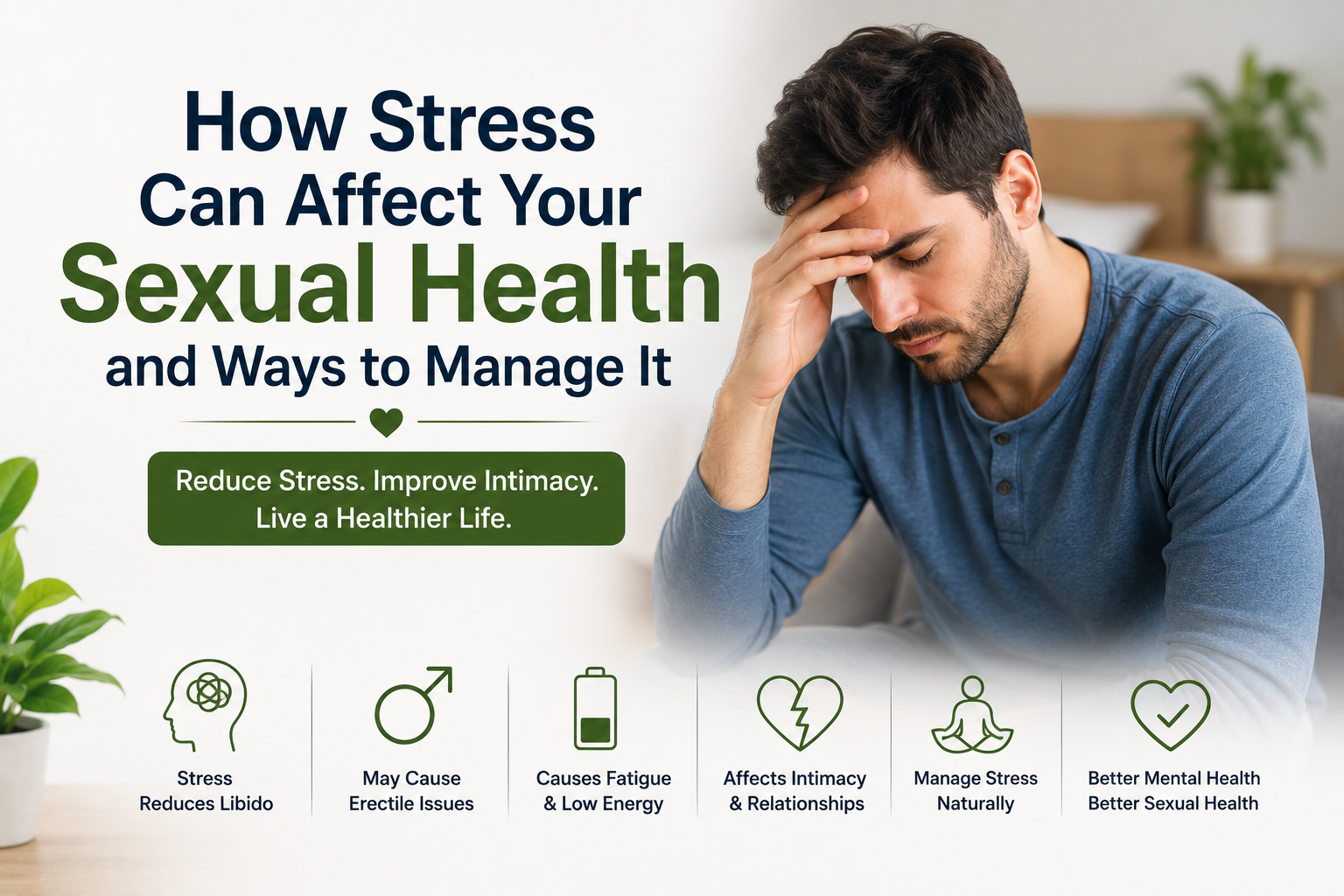
Stress is a normal part of life, but chronic stress can affect many aspects of physical and emotional health, including sexual wellness. Understanding the connection between stress and sexual health can help you adopt healthier coping strategies.
Understanding the Stress-Sexual Health Connection
When the body experiences stress, it releases hormones such as cortisol. Long-term stress may affect mood, sleep, energy levels, and relationship satisfaction.
Signs That Stress May Be Affecting Sexual Wellness
- Reduced sexual desire
- Difficulty relaxing
- Fatigue
- Mood changes
- Poor sleep quality
- Reduced confidence
Healthy Ways to Reduce Stress
1. Exercise Daily
Regular physical activity helps reduce stress and improve mood.
2. Practice Meditation
Mindfulness and deep breathing can promote relaxation.
3. Get Enough Sleep
Aim for 7–9 hours of quality sleep each night.
4. Eat a Healthy Diet
A balanced diet supports overall physical and emotional well-being.
5. Spend Time with Your Partner
Open communication and quality time strengthen emotional connections.
6. Reduce Screen Time
Taking breaks from digital devices can improve mental health.
7. Stay Organized
Managing your daily schedule can reduce unnecessary stress.
When Should You See a Doctor?
Seek medical advice if stress causes persistent sexual problems, anxiety, depression, or significantly affects your relationships and daily life.
Conclusion
Managing stress is an important part of maintaining overall health and sexual wellness. Healthy lifestyle habits, emotional support, and professional guidance when needed can help improve both mental and intimate well-being.