Staying Healthy During Seasonal Changes
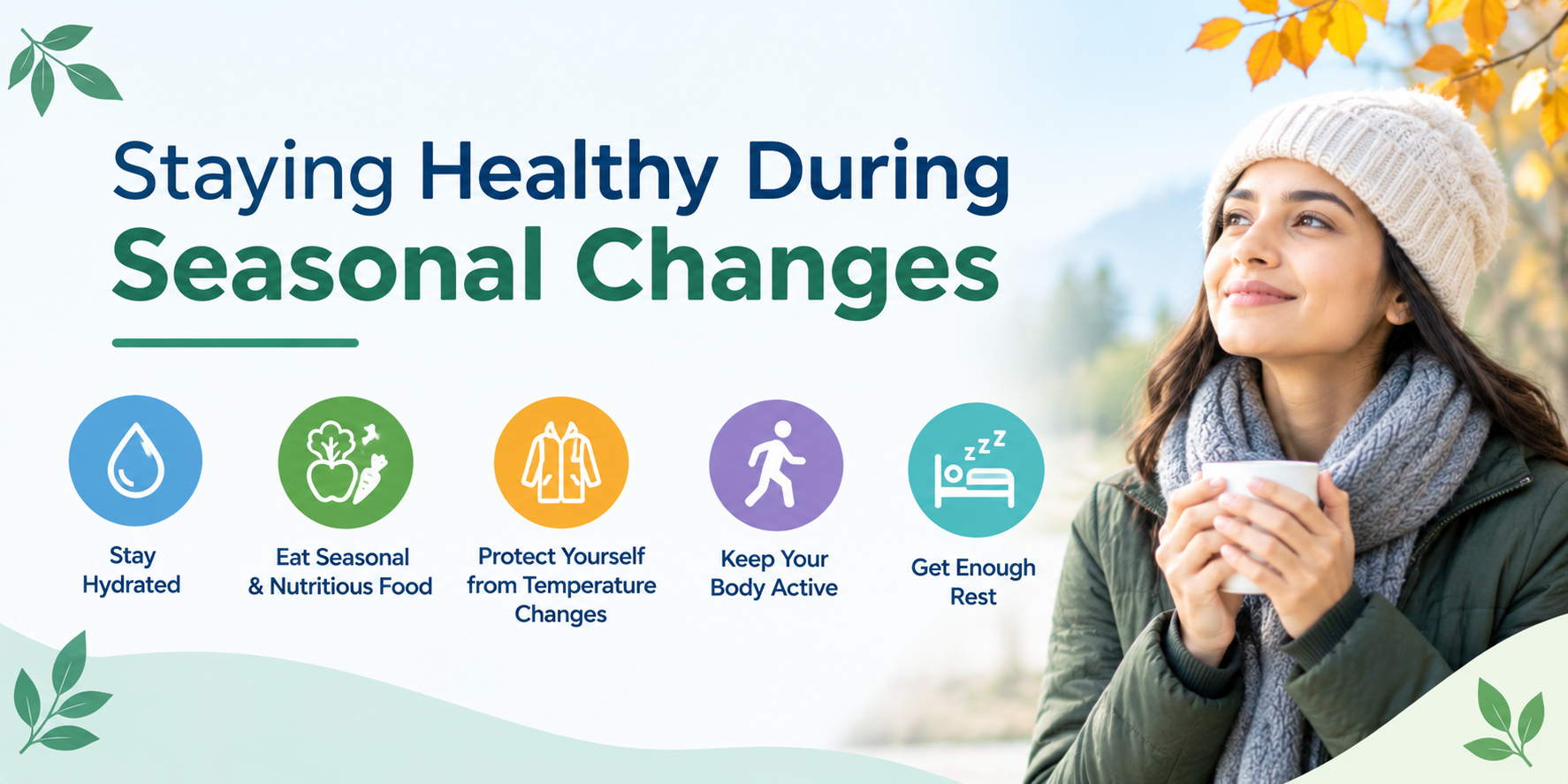
Changes in weather can affect our daily routines, eating habits, sleep, physical activity, and overall comfort. When temperatures move from hot days to cooler weather, it is important to maintain healthy habits and pay attention to changes in your body.
A few simple precautions can help you stay comfortable and maintain your general health during seasonal transitions.
Stay Hydrated
Even when the weather becomes cooler, your body still needs adequate fluids. You may feel less thirsty than during summer, but regular water intake remains important.
Keep drinking water throughout the day and increase your fluid intake when you are exercising or spending time outdoors in warm conditions.
Eat Seasonal and Nutritious Foods
Seasonal changes are a good opportunity to focus on fresh and nutritious foods. Include fruits, vegetables, whole grains, pulses, nuts, and other healthy foods in your meals.
Try to reduce excessive consumption of processed foods, sugary drinks, and heavily fried foods.
Protect Yourself From Temperature Changes
During seasonal transitions, mornings and evenings may be cooler while daytime temperatures remain warm. Wear comfortable clothing according to the weather and avoid unnecessary exposure to extreme temperatures.
Keeping your home comfortable and well ventilated can also support general well-being.
Keep Your Body Active
People may become less active as the weather changes. Try to maintain regular movement through walking, stretching, yoga, or other activities that suit you.
Regular physical activity supports general fitness, mobility, and mental well-being.
Maintain Good Hygiene
Good personal hygiene is important throughout the year. Regular handwashing can help reduce the spread of many infections.
If someone at home is unwell, avoid sharing personal items such as towels, cups, or other frequently used belongings.
Give Yourself Enough Rest
Changes in routine can sometimes affect sleep. Try to maintain regular sleeping hours and allow enough time for your body to rest.
Good sleep supports physical recovery, energy, concentration, and emotional well-being.
Don't Ignore Persistent Symptoms
If you develop symptoms that are severe, persistent, or getting worse, do not ignore them. Depending on the symptoms, professional medical evaluation may be necessary.
Seek prompt medical care for serious symptoms such as difficulty breathing, chest pain, severe weakness, or other sudden concerning changes.
Final Thoughts
Staying healthy during seasonal changes does not require complicated steps. Stay hydrated, eat nutritious food, remain active, maintain good hygiene, get enough rest, and pay attention to your health.
Small and consistent habits can help support better general health throughout the year.